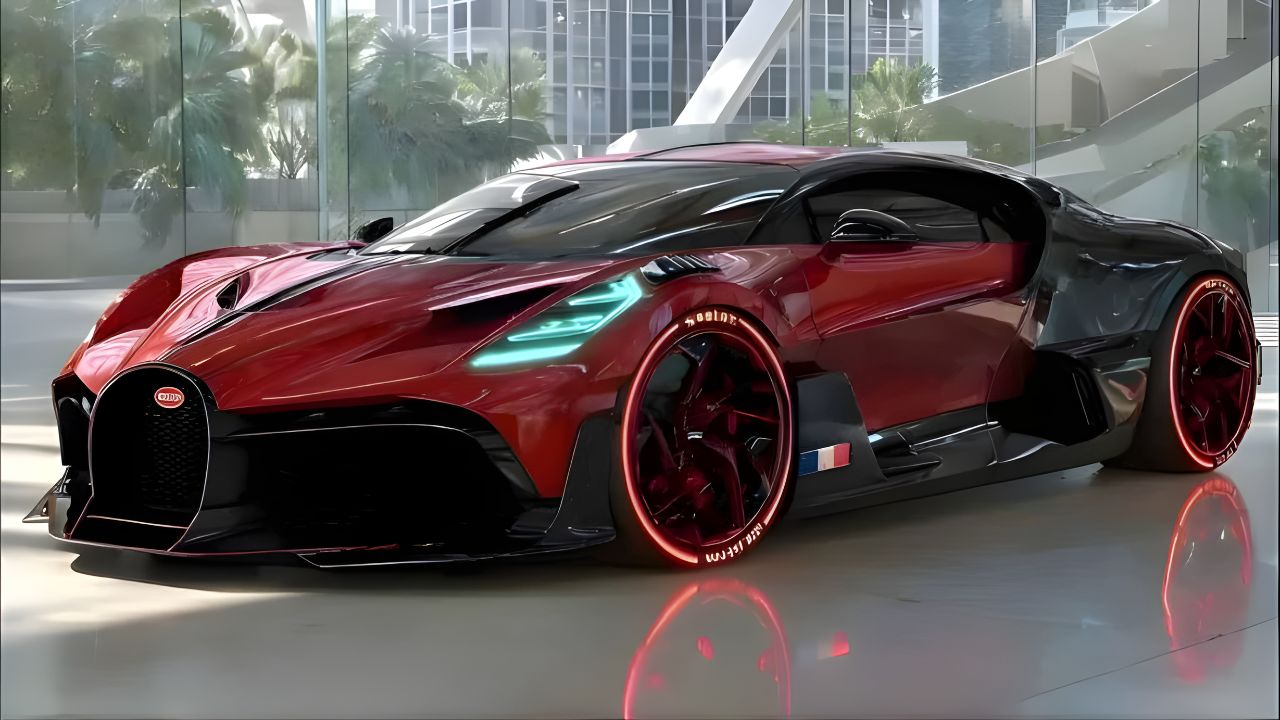
The automotive world is witnessing a seismic shift as the 2026 Bugatti Tourbillon Extreme makes its grand entrance. Moving away from the iconic W16 engine that defined the Veyron and Chiron eras, Bugatti has embraced a new philosophy of “mechanical purity.” The Tourbillon is not merely a successor; it is a complete reimagining of what a hypercar can be in an electrified age. By blending a high-revving, naturally aspirated V16 engine with cutting-edge electric motors, Bugatti has created a machine that honors the past while aggressively pursuing the future of speed and efficiency.
A Heart of Pure Emotion: The V16 Powertrain
At the core of this beast lies an 8.3-liter naturally aspirated V16 engine, developed in a prestigious partnership with Cosworth. Unlike its predecessors which relied on quad-turbocharging, this engine breathes on its own, reaching a staggering 9,000 RPM. This shift allows for a more “emotional” driving experience, characterized by a sharp throttle response and a mechanical howl that turbochargers often muffle. The internal combustion engine alone generates 1,000 horsepower, a feat of engineering that maintains Bugatti’s dominance in the combustion arena while reducing overall engine weight to just 252 kg.
The Symphony of Electrification
Complementing the massive V16 are three high-performance electric motors: two located on the front axle and one integrated into the rear drivetrain. This trio adds an additional 800 horsepower, bringing the total system output to a mind-blowing 1,800 horsepower. The electric motors provide “torque fill,” ensuring that there is never a lull in acceleration during gear changes. Furthermore, the inclusion of a 24.8 kWh battery pack allows the Tourbillon to travel roughly 60 km on pure electricity, making it surprisingly versatile for urban environments before the V16 wakes up for high-speed runs.
Performance Specifications and Technical Data
The engineering goals for the Tourbillon were clear: surpass the Chiron in every measurable metric. Below is a breakdown of the critical performance data that defines this next-generation hypercar.
| Feature | Specification |
| Engine Type | 8.3L Naturally Aspirated V16 + 3 Electric Motors |
| Total Horsepower | 1,800 HP (1,000 HP Gas / 800 HP Electric) |
| Top Speed | 445 km/h (276 mph) with Speed Key |
| 0–100 km/h (0–62 mph) | 2.0 Seconds |
| 0–400 km/h (0–248 mph) | < 25.0 Seconds |
| Transmission | 8-Speed Dual-Clutch (DCT) |
| Electric-Only Range | > 60 km (WLTP) |
| Curb Weight | 1,995 kg (Lighter than the Chiron) |
Aerodynamics and the Art of Speed
The exterior of the 2026 Tourbillon is a masterclass in “functional art.” Every curve, inlet, and ridge serves a thermodynamic or aerodynamic purpose. The signature horseshoe grille remains the focal point, but it is now flanked by slimline LED “eight-eye” headlights that give the car a wider, more aggressive stance. To manage the immense heat generated by the V16 and the hybrid system, Bugatti utilized 3D-printed structural braces and complex air ducts that flow through the chassis itself. The rear features a motorsport-inspired diffuser that integrates into the crash structure, optimizing downforce without the need for a massive, unsightly wing.
Horological Excellence in the Cockpit
The name “Tourbillon” refers to a complex mechanism in luxury watchmaking designed to counter the effects of gravity. This theme is literal in the cabin, where Bugatti has replaced digital screens with a mechanical instrument cluster. Crafted by Swiss watchmakers, the gauges consist of over 600 individual parts made from titanium, sapphire, and ruby. The steering wheel features a fixed central hub, meaning the gauges stay perfectly visible even as you turn the wheel. This focus on “analogue elegance” ensures the interior will never look dated as digital technology evolves.
Lightweight Innovation and 3D Engineering
Despite carrying a heavy battery pack and three electric motors, the Tourbillon is actually lighter than the Chiron it replaces. This was achieved through the extensive use of T800 carbon composite for the monocoque and the integration of the battery as a structural element. Bugatti also collaborated with Divergent Technologies to create 3D-printed suspension components. These organic-looking parts are 45% lighter than traditional forged pieces, proving that high-tech manufacturing is the key to maintaining agility in the era of heavy hybrid systems.
Exclusivity and the Future of the Brand
With a production run limited to just 250 units and a price tag starting around $4.6 million, the Tourbillon is one of the most exclusive vehicles on the planet. Deliveries are slated to begin in 2026, and the order books are already filled years into the future. This car represents a “new era” for the Molsheim-based brand under the leadership of Mate Rimac. It proves that the hypercar of tomorrow doesn’t have to sacrifice the soul of a combustion engine to achieve the performance benefits of electrification.
FAQs
Q1 How fast is the 2026 Bugatti Tourbillon?
The Tourbillon can reach a top speed of 445 km/h (276 mph) when using the “Speed Key.” It accelerates from 0 to 100 km/h in just 2 seconds and hits 400 km/h in under 25 seconds.
Q2 Does the Bugatti Tourbillon have any screens inside?
While the interior is primarily analogue and mechanical, there is a small, hidden digital screen that can retract into the dashboard when not in use for navigation and Apple CarPlay.
Q3 What is the electric range of the Tourbillon?
The hypercar features a 24.8 kWh battery that provides an electric-only driving range of approximately 60 kilometers (37 miles), allowing for silent operation in city centers.
Disclaimer
The content is intended for informational purposes only. you can check the officially sources our aim is to provide accurate information to all users