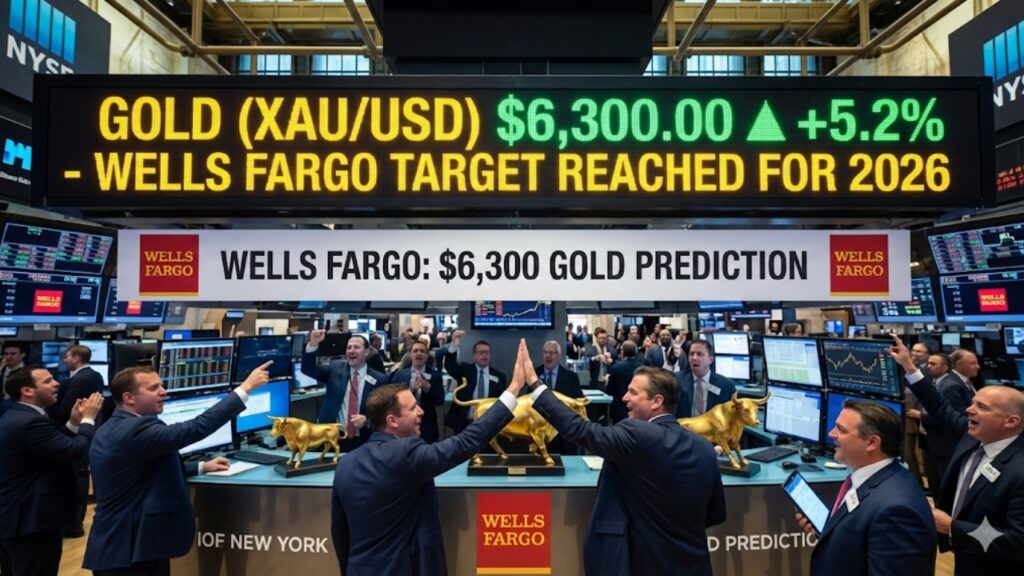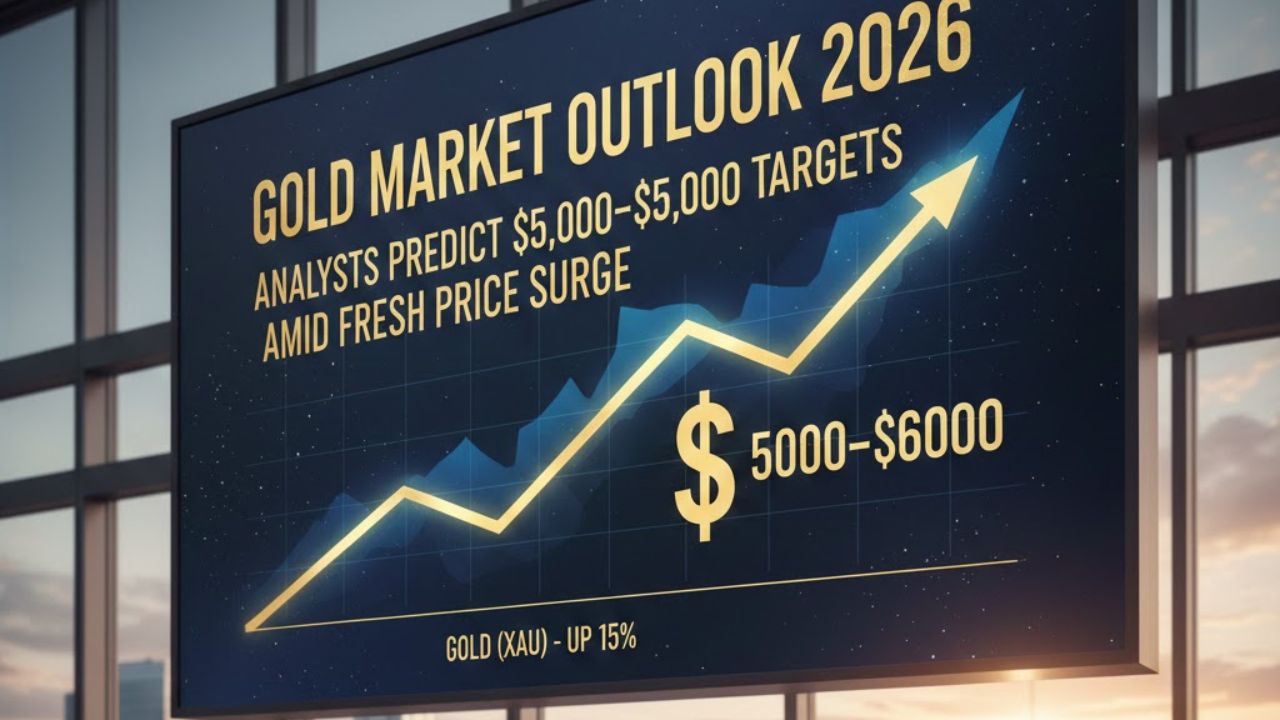
The global financial landscape in 2026 is witnessing a monumental shift as gold prices shatter previous records, climbing toward the psychological milestones of $5,000 to $6,000 per ounce. After an extraordinary performance in 2025, the yellow metal has transitioned from a traditional safe-haven asset into a dominant force in institutional portfolios. This fresh price surge is not merely a speculative bubble but a “rebasing” of gold’s value, driven by structural changes in global finance, persistent geopolitical friction, and a fundamental move away from debt-laden fiat currencies. Analysts from major institutions like J.P. Morgan, Wells Fargo, and Goldman Sachs are increasingly aligning their forecasts, suggesting that the current rally has the underlying support to reach unprecedented heights by the end of the year.
The Role of Central Banks and De-dollarization
A primary engine behind the 2026 surge is the aggressive and sustained accumulation of gold by central banks, particularly in emerging markets. For the first time in decades, gold’s share of global official reserves has surpassed that of U.S. Treasuries, signaling a profound shift in trust toward tangible assets. Nations are diversifying their holdings to mitigate the risks of currency debasement and potential economic sanctions. The World Gold Council reports that central banks are on track to purchase approximately 800 to 1,000 tonnes this year alone. This “conviction buying” provides a solid price floor; even during minor market corrections, institutional demand remains relentless, preventing the sharp crashes often seen in more volatile asset classes.
Macroeconomic Catalysts and Interest Rate Shifts
The Federal Reserve’s monetary policy continues to be a dual-edged sword that currently favors bullion. As the Fed navigates a path of gradual interest rate cuts to sustain economic growth, the “opportunity cost” of holding non-yielding gold has plummeted. Lower real yields make gold more attractive compared to fixed-income assets. Furthermore, the 2026 economic environment is characterized by “sticky” inflation and record-high global debt levels. With the U.S. national debt surpassing critical thresholds, investors are turning to gold as the ultimate insurance policy. Unlike paper currency, gold cannot be printed or devalued by government decree, making it the preferred vehicle for preserving purchasing power in a high-inflation era.
Comparative Market Projections for 2026
To understand the current trajectory, it is helpful to look at how major financial institutions have revised their outlooks. The consensus has shifted from cautious optimism to a decisively bullish stance as the metal maintains its position above the $5,000 support level.
| Institution | 2026 Price Target (Per Ounce) | Primary Market Driver |
| Wells Fargo | $6,100 – $6,300 | Structural demand & policy surprises |
| J.P. Morgan | $5,900 – $6,300 | Central bank diversification (800t+ forecast) |
| Goldman Sachs | $5,400 – $5,800 | Fear of inflation & ETF inflows |
| UBS | $6,200 | Currency instability & systemic risk hedge |
| Consensus Base Case | $5,500 | Sustained geopolitical tension |
Geopolitical Tensions and the Flight to Safety
Geopolitics remains the most unpredictable yet potent driver for gold in 2026. Ongoing conflicts in the Middle East and Eastern Europe, combined with intensifying trade disputes between major world powers, have kept the “risk-off” sentiment alive. Gold thrives in this environment of uncertainty. Whenever diplomatic relations strain or trade tariffs are announced, the market reacts with a flight to safety. Additionally, the shift toward a multi-polar world has encouraged many private investors to mirror the behavior of central banks. High-net-worth individuals and retail investors alike are increasing their allocations to physical gold and gold-backed ETFs, creating a broad-based demand that spans the entire globe.
Technical Breakouts and Fibonacci Projections
From a technical analysis perspective, the breakout above the $5,000 level in early 2026 has opened the door to much higher Fibonacci extension targets. Analysts observing the long-term charts note that the “steady, non-parabolic” nature of the current advance is actually a healthy sign. It suggests that the market is not yet overextended and that the rally is supported by actual buying rather than just leveraged speculation. If gold can maintain its momentum and clear the $5,600 resistance zone, the path toward $6,100 becomes technically clear. Fibonacci projections even suggest an “extreme bullish” scenario of $7,200 if a major currency crisis or systemic liquidity shock were to occur within the next twelve months.
The Impact of Supply Constraints
While demand is soaring, the supply side of the gold market remains remarkably inelastic. Bringing new gold mines into production is a process that takes years, if not decades, of exploration and permitting. In 2026, global mine production has largely plateaued, unable to keep pace with the massive surge in central bank and investor appetite. This supply-demand imbalance is a classic recipe for higher prices. Unlike industrial metals that may see increased recycling or production hikes during price spikes, gold’s new supply represents only a tiny fraction of the total existing stock, meaning the price must rise significantly to entice long-term holders to sell their existing bullion.
Future Outlook: Can the Momentum Last?
As we look toward the latter half of 2026, the question is whether gold can sustain these lofty levels. Most analysts believe the structural drivers—de-dollarization, high debt, and geopolitical risk—are long-term trends that will not disappear overnight. While tactical pullbacks are inevitable as some traders book profits, the overall trend remains firmly bullish. Gold has entered a new era where it is no longer just a “crisis asset” but a core component of a modern, diversified portfolio. For those looking to hedge against a rapidly changing global order, the yellow metal remains the most trusted anchor in a sea of financial uncertainty.
FAQs
Q1 What is the main reason gold is hitting $5,000 in 2026?
The surge is primarily driven by central banks diversifying away from the U.S. dollar, persistent global inflation, and gold’s role as a hedge against record-high levels of sovereign debt.
Q2 Will the gold price crash after this surge?
While short-term corrections are expected, analysts believe the structural demand from central banks and the lack of new supply will provide a strong floor, preventing a total market crash.
Q3 Is it too late to invest in gold at these prices?
Many institutional analysts, including those from J.P. Morgan and Wells Fargo, suggest that if the “extreme bullish” scenarios play out, gold could still have significant upside toward the $6,000–$7,000 range.
Disclaimer
The content is intended for informational purposes only. you can check the officially sources our aim is to provide accurate information to all users