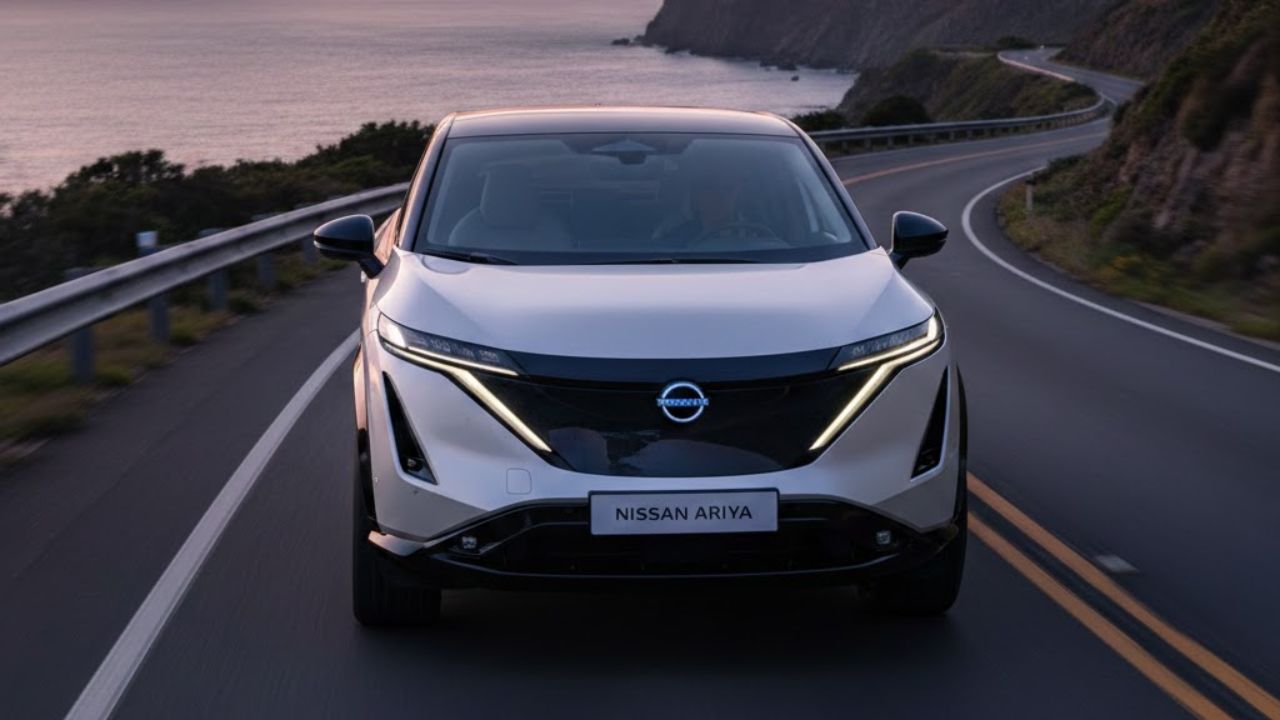
The Nissan Ariya marks a significant milestone for a brand that essentially pioneered the mass-market electric vehicle (EV) movement with the Leaf. However, unlike its predecessor, the Ariya is designed to compete in the highly contested mid-size crossover segment, going head-to-head with heavyweights like the Tesla Model Y and Hyundai Ioniq 5. With a focus on Japanese craftsmanship and modern aesthetics, this electric SUV moves away from the “economy car” feel of early EVs, offering a more premium, lounge-like experience that emphasizes comfort and serenity over raw, blistering speed.
Powertrain and Driving Dynamics
Performance in the Ariya is varied, depending largely on whether you opt for the single-motor front-wheel-drive (FWD) or the dual-motor e-4ORCE all-wheel-drive (AWD) setup. The entry-level models provide a respectable 214 to 238 horsepower, which is more than adequate for daily commuting and highway merging. For those seeking more excitement, the e-4ORCE variants ramp up the power significantly to 389 horsepower and 442 lb-ft of torque. This flagship configuration allows the SUV to sprint from 0 to 60 mph in roughly 4.8 seconds. Beyond speed, the e-4ORCE system is engineered to minimize vehicle “pitch” during braking, ensuring a flatter, more stable ride that passengers will certainly appreciate.
Battery Capacity and Real-World Range
Nissan offers the Ariya with two distinct battery sizes to cater to different driving needs. The standard 63 kWh battery (often labeled as the “Engage” trim) provides an EPA-estimated range of around 216 miles, making it an ideal choice for urban dwellers. Meanwhile, the larger 87 kWh battery pack extends that range up to 304 miles on a full charge in the Venture+ trim. While these figures are competitive, it is worth noting that the AWD models and higher trims with larger wheels do see a slight dip in efficiency. Charging is handled via a 130 kW DC fast-charger, which can replenish the battery from 10% to 80% in approximately 35 to 40 minutes under optimal conditions.
Detailed Specifications Table
| Feature | 63 kWh Battery (FWD) | 87 kWh Battery (e-4ORCE AWD) |
| Horsepower | 214 hp | 389 hp |
| Torque | 221 lb-ft | 442 lb-ft |
| 0-60 MPH | ~7.2 Seconds | ~4.8 Seconds |
| EPA Range | Up to 216 Miles | Up to 272 Miles |
| Max DC Charge | 130 kW | 130 kW |
| Cargo Space | 22.8 cu. ft. (Seats Up) | 22.8 cu. ft. (Seats Up) |
A Minimalist, Lounge-Like Interior
The cabin of the Nissan Ariya is perhaps its most standout feature, departing from traditional automotive design in favor of a “Timeless Japanese Futurism” theme. The dashboard is remarkably clean, featuring haptic feedback buttons integrated directly into the wood-grain trim that only illuminate when the vehicle is powered on. A flat floor design provides an incredible sense of legroom, especially in the front. One of the more unique innovations is the power-sliding center console, which can be moved fore and aft to customize the cockpit layout. Nissan’s “Zero Gravity” seats remain a highlight, offering exceptional support that reduces fatigue during long-distance travels.
Cutting-Edge Technology and Infotainment
Connectivity in the Ariya is centered around a sleek, curved monolith housing dual 12.3-inch displays. The interface is intuitive, supporting wireless Apple CarPlay and wired Android Auto, along with Amazon Alexa integration. Drivers benefit from the ProPILOT Assist 2.0 system, which offers hands-off single-lane highway driving and guided lane changes on compatible roads. The inclusion of a Head-Up Display (HUD) and an Intelligent Rear View Mirror further enhances the tech-forward feel, ensuring that vital information is always within the driver’s line of sight without being distracting.
Practicality and Daily Utility
While the Ariya prioritizes style, it doesn’t entirely sacrifice utility. The cargo area offers a “Divide-N-Hide” floor system, allowing users to create secret compartments or flat loading surfaces. While the 22.8 cubic feet of space behind the rear seats is slightly less than some of its boxier competitors, the wide opening and low lift-over height make it easy to load groceries or sports gear. Additionally, the Ariya features a unique “hidden” storage box in the center of the dashboard that electrically slides out to serve as a small tray table, perfect for working on a laptop or enjoying a snack while the vehicle is charging.
Final Verdict: Is the Ariya Right for You?
The Nissan Ariya is a compelling choice for those who value interior quality, quietness, and a smooth ride over the minimalist or sporty extremes found elsewhere in the EV market. It feels like a well-built, “grown-up” electric car that focuses on the human experience inside the cabin. While its charging speeds are not the fastest in the segment, the overall package of safety tech, comfortable seating, and striking exterior design makes it a strong contender for families looking to make the switch to electric without losing the comforts of a premium SUV.
FAQs
Q1. How long does it take to charge the Nissan Ariya at home?
Using a Level 2 (240V) home charger, the 63 kWh battery takes about 10 hours to fully charge, while the larger 87 kWh battery requires approximately 14 hours.
Q2. Does the Nissan Ariya have a “Frunk” (Front Trunk)?
No, the Ariya does not have a front trunk. Nissan utilized that space to house the HVAC components, which allowed them to push the dashboard forward and create a more spacious interior cabin.
Q3. Is the ProPILOT Assist 2.0 standard on all trims?
No, the hands-off ProPILOT Assist 2.0 system is typically available on higher trims like the Empower+ and Platinum+. Lower trims come standard with the original ProPILOT Assist with Navi-link.
Disclaimer
The content is intended for informational purposes only. you can check the officially sources our aim is to provide accurate information to all users.