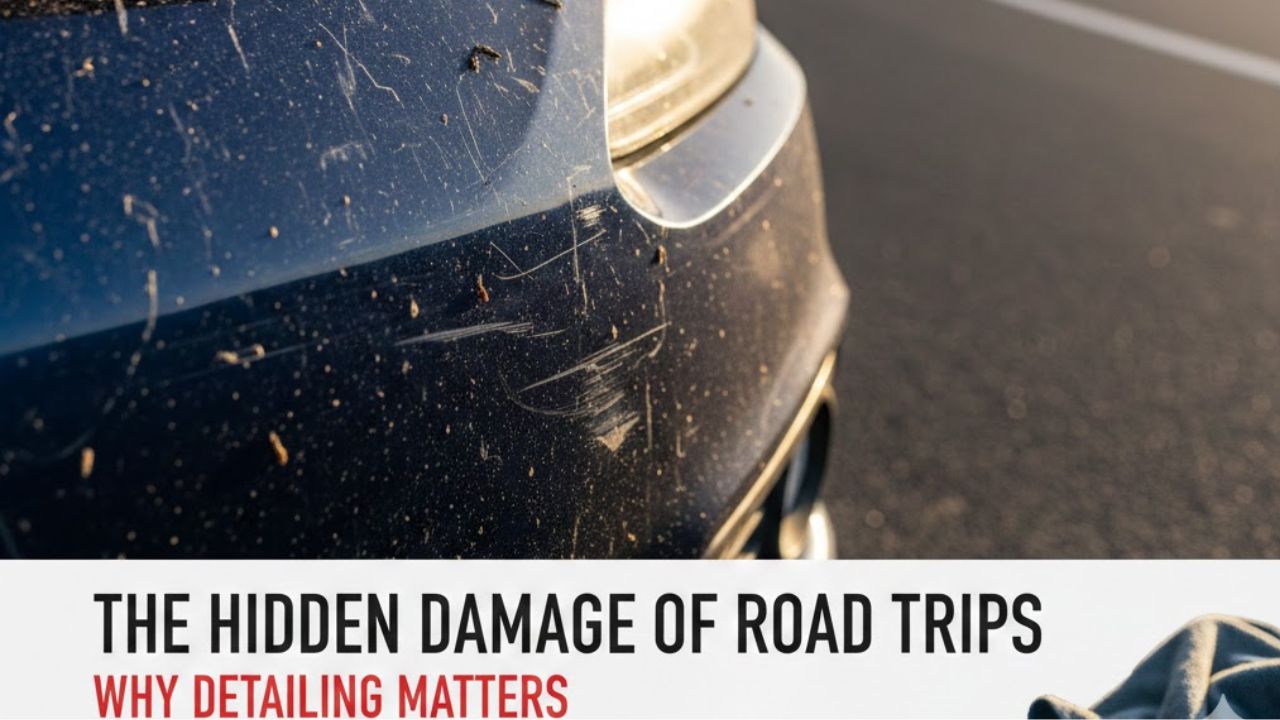
There is an undeniable magic to the open road—the changing landscapes, the curated playlists, and the freedom of the horizon. However, while you are busy making memories, your vehicle is essentially entering a high-speed war zone. Most drivers assume that a quick pass through a local gas station car wash after a long trip is enough to restore their car’s health. In reality, road trips subject a vehicle to unique chemical and physical stressors that go far deeper than surface-level dust. Professional detailing isn’t just about the “aesthetic” of a clean car; it is a critical maintenance step that prevents long-term structural and cosmetic degradation.
The Invisible Corrosives: Insects and Bird Droppings
One of the most immediate threats during a long drive is the accumulation of “biologicals”—specifically crushed insects and bird droppings. When an insect hits your windshield or bumper at 70 mph, it isn’t just a mess; it is a chemical reaction. Bug guts are highly acidic. If left to bake in the afternoon sun, these acids eat through the clear coat and begin to etch the paint. Similarly, bird droppings contain uric acid that can cause permanent scarring on your vehicle’s finish in as little as 48 hours. A standard car wash often lacks the specialized enzymes and clay bar treatments required to safely lift these contaminants without scratching the paint.
The Grime Beneath: Road Salt and Industrial Fallout
Even in the summer, road trips expose your car to a cocktail of industrial fallout and grime. Construction zones often leave behind “rail dust” or tiny metallic particles that lodge themselves into the paint. Over time, these particles oxidize, leading to tiny rust spots that compromise the metal body. If your journey takes you through coastal regions or mountain passes where salt is used for dust control, the risk of undercarriage corrosion skyrockets. Professional detailing focuses on high-pressure decontamination of the wheel wells and chassis, areas that the average owner—and most automated washes—completely ignore.
Understanding the Impact: Maintenance Comparison
To understand why professional intervention is necessary, it is helpful to look at how different contaminants affect your vehicle over a standard 1,000-mile journey.
| Contaminant Type | Immediate Effect | Long-term Consequence | Removal Method |
| Brake Dust | Dark film on wheels | Metal pitting and rim corrosion | Acid-free wheel cleaner |
| Tree Sap | Sticky residue | Clear coat bubbling/peeling | Isopropyl alcohol/Clay bar |
| Road Salt | Surface haze | Undercarriage rust & oxidation | High-pressure salt neutralizer |
| UV Radiation | Paint fading | Plastic trim cracking/oxidation | Ceramic coating/Sealants |
| Interior Sand | Fiber abrasion | Carpet thinning and odor buildup | Industrial extraction |
The Greenhouse Effect: Interior Decay
While the exterior takes a beating from the elements, the interior suffers from a different kind of “hidden damage.” During a road trip, the cabin becomes a living space. Spilled coffee, crumbs, and sweat from long hours in the seat create a breeding ground for bacteria and mold, especially in the humid environment of an air-conditioned car. Furthermore, the intense UV exposure through the windows can dry out leather and cause dashboard plastics to become brittle and crack. Professional detailers use UV-blocking conditioners and steam cleaning to sanitize the cabin and preserve the flexibility of the materials, ensuring the interior doesn’t age five years in a single week.
Micro-Abrasions and the Danger of “Quick Washes”
The most common mistake travelers make is taking their salt-and-grime-covered car through an automatic “brush” car wash. These brushes often hold onto the grit from the truck that went through before you. This creates a sandpaper effect, resulting in “swirl marks” or micro-scratches that dull the paint’s reflection. Professional detailing utilizes the “two-bucket” hand-wash method or foam cannons to ensure that dirt is lubricated and lifted away from the surface rather than rubbed into it. This preservation of the clear coat is what maintains the vehicle’s resale value over time.
The Mechanical Benefit of Cleanliness
It may seem counterintuitive, but a clean car actually performs better. Significant accumulation of road grime and mud on the wheels can throw off your tire balance, leading to vibrations and uneven tire wear. Thick layers of dust on the radiator can slightly impede cooling efficiency. Furthermore, built-up brake dust is highly abrasive; if not removed from the rims and calipers, it can lead to heat retention and premature wear of braking components. By detailing the vehicle post-trip, you are performing a visual inspection that can catch small mechanical issues, like a leaking CV boot or a frayed belt, before they become catastrophic.
Investing in Longevity and Resale Value
Ultimately, detailing is an investment in the “health” of your asset. A vehicle that is regularly decontaminated and protected with high-quality waxes or ceramic sealants will always command a higher price on the secondary market. Beyond the money, there is the psychological benefit: driving a car that feels, smells, and looks new makes the daily commute feel like less of a chore. After the dust of the highway settles, your car deserves more than a rinse. It deserves a restoration that strips away the damage of the miles and prepares it for the next adventure.
FAQs
Q1 How soon after a road trip should I detail my car?
Ideally, you should wash the exterior within 48 hours to prevent acidic bug guts and salt from etching the paint. A full professional detail is recommended within two weeks of your return.
Q2 Is a ceramic coating worth it for frequent travelers?
Yes. Ceramic coatings create a hydrophobic layer that prevents contaminants from bonding to the paint, making it significantly easier to clean off road grime and preventing UV damage.
Q3 Why can’t I just vacuum the interior myself?
Standard vacuums lack the lift power to remove deep-seated sand and allergens from carpet fibers. Professional extractors use heat and suction to remove bacteria that cause “stale car” odors.
Disclaimer
The content is intended for informational purposes only. you can check the officially sources our aim is to provide accurate information to all users.